Archives
- 2026-08
- 2026-07
- 2026-06
- 2026-05
- 2026-04
- 2026-03
- 2026-02
- 2026-01
- 2025-12
- 2025-11
- 2025-10
- 2025-09
- 2025-03
- 2025-02
- 2025-01
- 2024-12
- 2024-11
- 2024-10
- 2024-09
- 2024-08
- 2024-07
- 2024-06
- 2024-05
- 2024-04
- 2024-03
- 2024-02
- 2024-01
- 2023-12
- 2023-11
- 2023-10
- 2023-09
- 2023-08
- 2023-07
- 2023-06
- 2023-05
- 2023-04
- 2023-03
- 2023-02
- 2023-01
- 2022-12
- 2022-11
- 2022-10
- 2022-09
- 2022-08
- 2022-07
- 2022-06
- 2022-05
- 2022-04
- 2022-03
- 2022-02
- 2022-01
- 2021-12
- 2021-11
- 2021-10
- 2021-09
- 2021-08
- 2021-07
- 2021-06
- 2021-05
- 2021-04
- 2021-03
- 2021-02
- 2021-01
- 2020-12
- 2020-11
- 2020-10
- 2020-09
- 2020-08
- 2020-07
- 2020-06
- 2020-05
- 2020-04
- 2020-03
- 2020-02
- 2020-01
- 2019-12
- 2019-11
- 2019-10
- 2019-09
- 2019-08
- 2019-07
- 2019-06
- 2019-05
- 2019-04
- 2018-07
-
Besides the enhanced expression of costimulatory and adhesio
2020-05-21
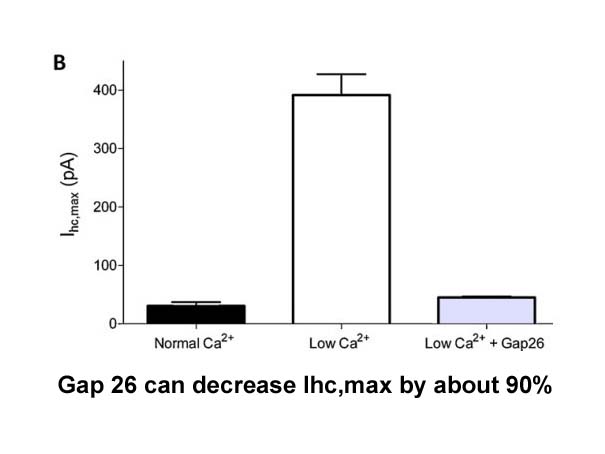
Besides the enhanced expression of costimulatory and adhesion proteins, also the expression of the CD83 surface molecule is strongly enhanced during DC maturation (Banchereau and Steinman 1998; Banchereau et al. 2000). In fact, CD83 is a major cell surface marker for fully mature DC, as it can not b
-
Based on both the observational and theoretical data
2020-05-21
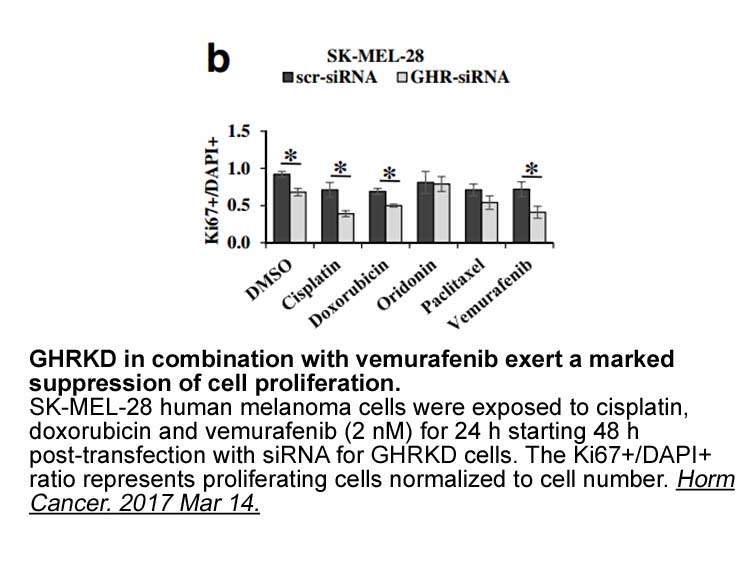
Based on both the observational and theoretical data generated in this study, it appears that the mechanism(s) underlying lower IFM CPT1 activity is complex. Modeling enzyme activity versus alterations in catalytic efficiency (Fig. 3A) suggests that the observed age-associated changes in Km and Vmax
-
Introduction The COMT gene is located on chromosomal band q
2020-05-21
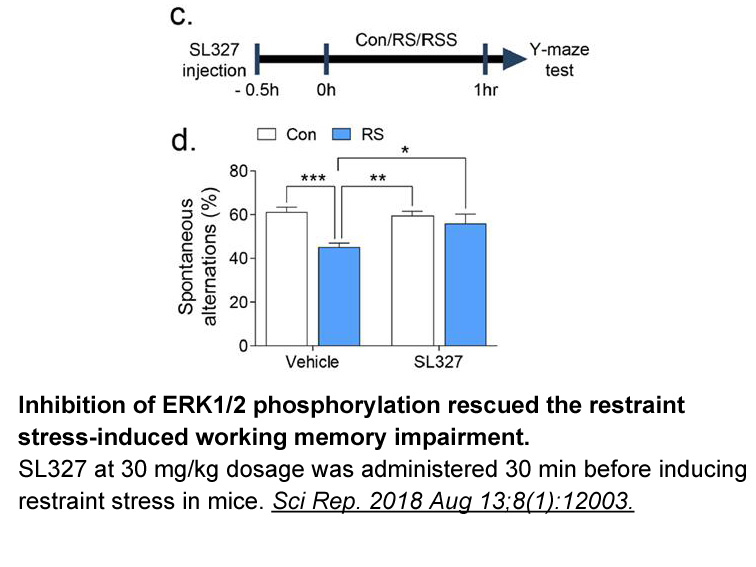
Introduction The COMT gene is located on chromosomal band 22q11.2, extends over 28 kb, contains six exons, and encodes for catechol-O-methyl-transferase (Weinshilboum and Raymond, 1977; Grossman et al., 1992; Lundström et al., 1995; Bearden et al., 2005). This enzyme plays a major role in regulatio
-
Previously published data showed an interaction of
2020-05-21

Previously published data showed an interaction of α-tubulin and CK1δ [15] that was validated in the present study using SPR (Fig. 1A). The dominant motifs involved in the CK1δ/α-tubulin interface were defined using a peptide library of peptides covering the CK1δ amino Adrucil sequence (Supplementar
-
PGE exerts its functions by binding
2020-05-21
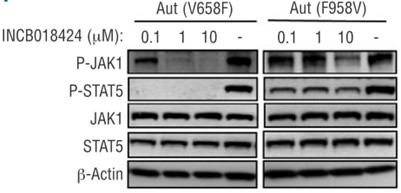
PGE2 exerts its functions by binding to different receptors. Four different subtypes of PGE2 receptors are found in mammals and are designated as EP1-4. These are G-protein coupled receptors that belong to a family of seven rhodopsin-like transmembrane spanning receptors. They are structurally diffe
-
This study showed that ER redox disturbance associated ER
2020-05-21
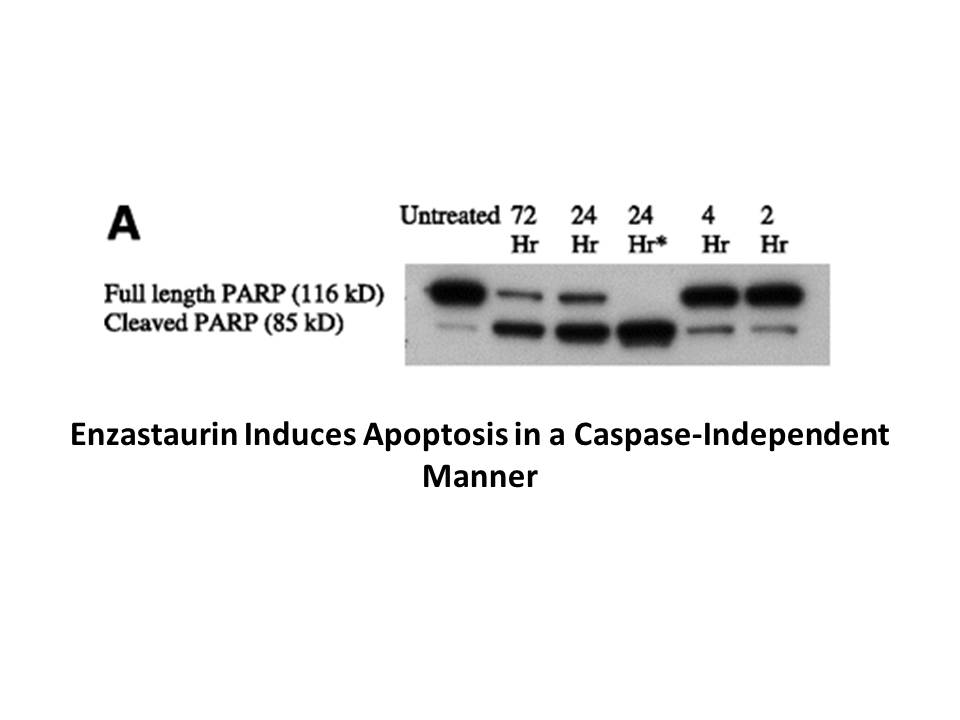
This study showed that ER-redox disturbance-associated ER stress is linked to cytoplasmic chaperone signaling, including HSP90 stability and its client protein, eNOS. The highly increased PERK and IRE-1α lead to dissociation with the chaperone protein, thereby decreasing HSP90 stability (Fig. 5B). S
-
The N terminal amino acid sequence was made
2020-05-21
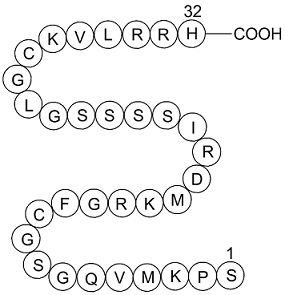
The N-terminal amino PS-341 sequence was made for STH2. This sequence showed high similarity (100%) with to trypsin-like found in the human airway classified as serine proteinase that also belongs to peptidase family SI and related also with chymotrypsin-like enzymes (Yasuoka et al., 1997). The seq
-
In this study we were
2020-05-21
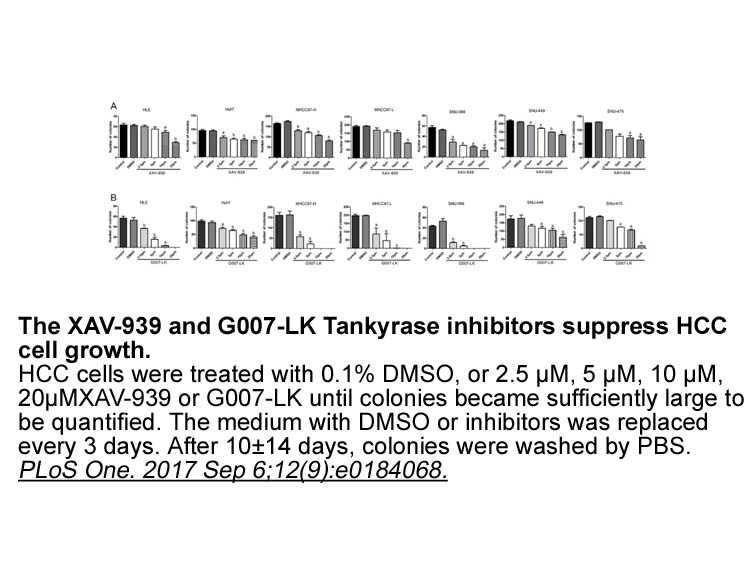
In this study, we were able derive new insights into the biology of DDR2 including the demonstration that cellular tyrosine phosphorylated proteins co-localise with DDR2 and exogenously added collagen I (Fig. 1G). This finding suggests that similar to the focal adhesion complexes associated with int
-
In contrast to SQLE HMGCR could be efficiently
2020-05-21

In contrast to SQLE, HMGCR could be efficiently degraded in AGK 2 lacking UBE2J2. However, this was not the case in cells devoid of UBE2G2, as these cells were unable to support 25-hydroxycholesterol (25-HC)-stimulated degradation of HMGCR (Fig. 1C). This finding is consistent with our recently rep
-
It was thus found that E
2020-05-21
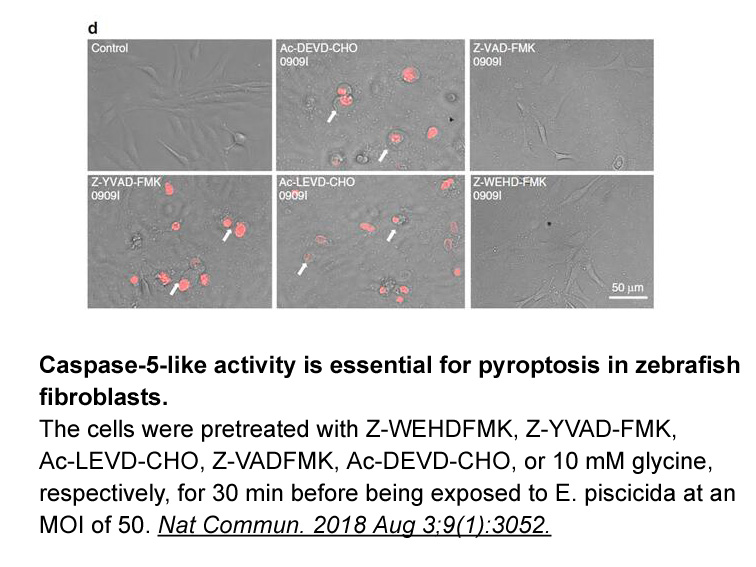
It was thus found that E1 plays an important role in G. intestinalis biology. Inhibiting E1 expression by RNA antisense in trophozoites was lethal while E1 overexpression induced a five-fold increase in cyst formation during encystation. The changes in E1 location during this process and its localiz
-
Introduction DHFR is an important enzyme in both
2020-05-21
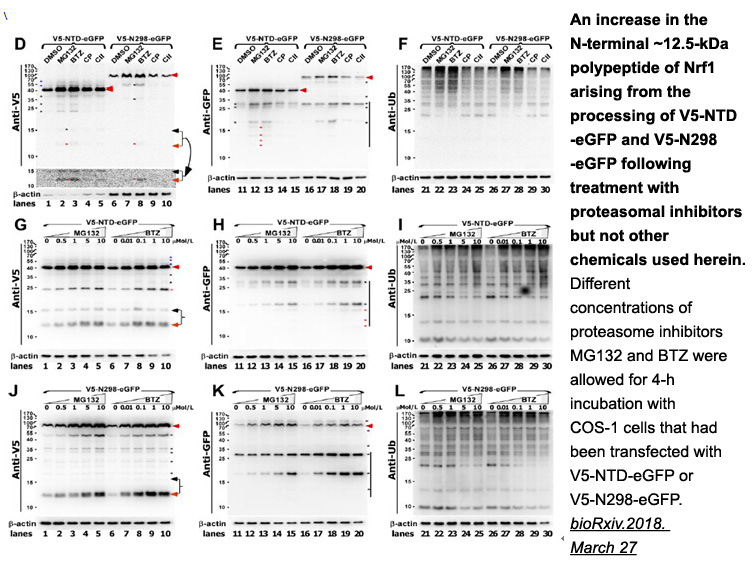
Introduction DHFR is an important enzyme in both mammals and microorganism including Mycobacterium tuberculosis (Mtb). It catalyzes folic Senexin A conversion to dihydro and tetrahydro folic acid which is a crucial step in folate pathway [1]. Inhibition of folate pathway leads to interruption of t
-
Moreover recent structural studies of VEEV nsP
2020-05-21
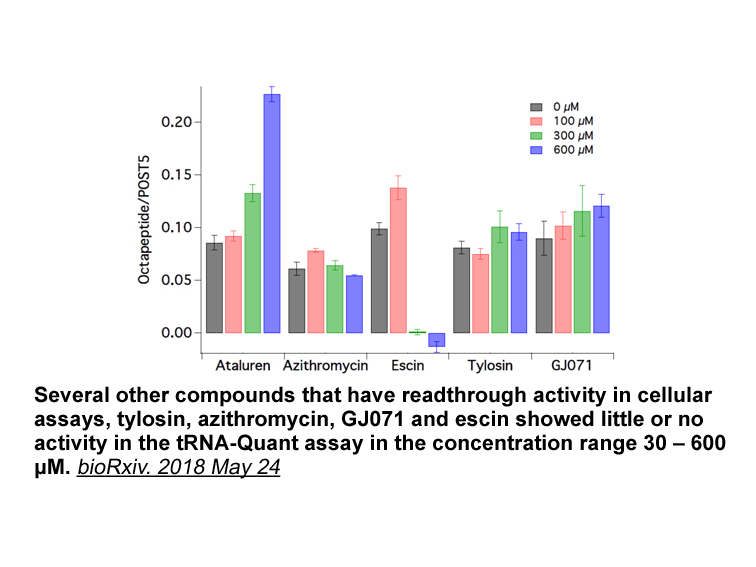
Moreover, recent structural studies of VEEV nsP2pro in complex with E-64d revealed an important molecular interaction at the interface of two subdomains. In this structure, Asn475 which is in polar contact with carbonyl oxygen of Asp507 of the protease subdomain makes an H-bond with Arg662 of the MT
-
In the pleural exudates which
2020-05-21
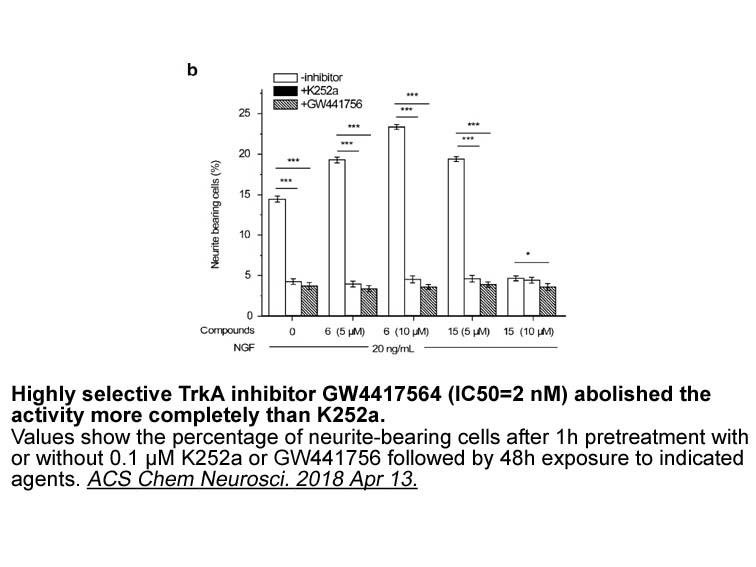
In the pleural exudates, which reflect the in vivo conditions, the concentrations of CysLTs and PGE2 were quite similar. However, when cancer γ-Secretase inhibitor IX were cultured for 24 h, both analyses of cell culture medium and cell incubations with Ca2+ ionophore showed low levels of CysLTs. In
-
Prostaglandins PGs are lipid mediators that exhibit a variet
2020-05-21
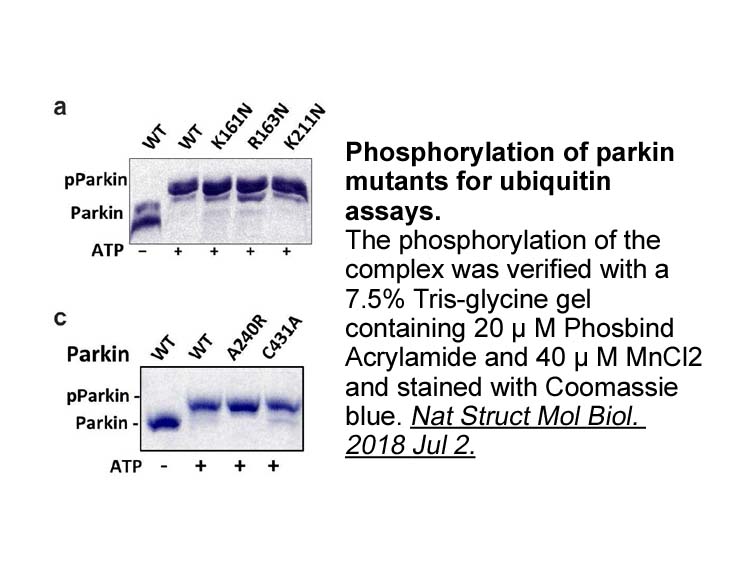
Prostaglandins (PGs) are lipid mediators that exhibit a variety of physiological properties by interacting specific G protein-coupled receptors (GPCRs) [10]. PGD2 is synthesized from PGH2 through two distinct PGD synthases; lipocalin-type PGD synthase (L-PGDS) and hematopoietic PGD synthase (H-PGDS)
-
br Methods br Results br Discussion On the other
2020-05-21
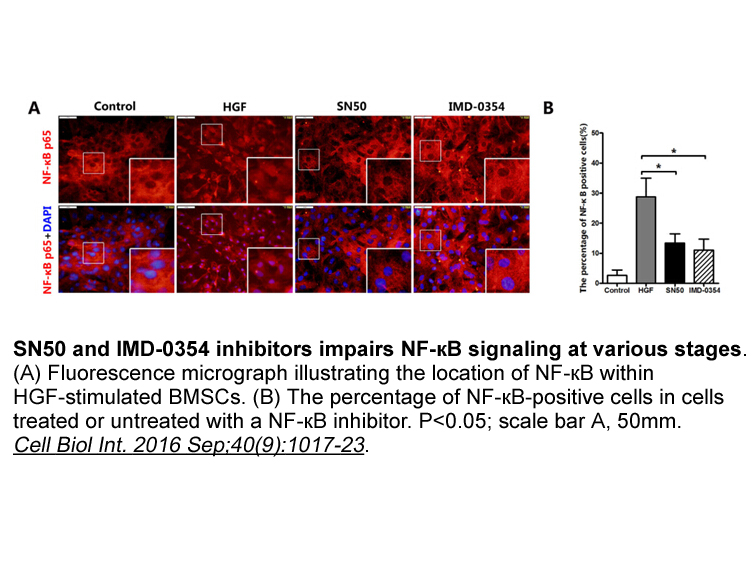
Methods Results Discussion On the other hand, surgical patients have to some extent stress during pre- and/or post-operative period. It is well known that CRF/CRF1 receptor is involved in the activation of HPA during acute and chronic stress (Papadimitriou and Priftis, 2009, Zelena et al.,
16459 records 883/1098 page Previous Next First page 上5页 881882883884885 下5页 Last page